

Welcome to our spore lab, where the magic of mushroom research comes to life! Today, we’re taking you on an exciting tour behind the scenes to uncover the fascinating world of spore storage, liquid culture techniques, sterilization methods, and the art of scaling up production!
As you step into our spore lab, you’ll be greeted by the hum of temperature-controlled incubators. The incubators allow for optimal temperatures to be set which creates the preferred environment for mycelium growth. Each incubator houses a diverse collection of mushroom spores & ensures their longevity and viability.
Sterilization is the backbone of our spore lab, and our researchers are masters of cleanliness. We’ll reveal the top tips and tricks for maintaining a sterile environment, from working in laminar flow hoods to the intricacies of autoclaving to changing up the cleaning products you are using. As we emphasize the importance of sterile practices, you’ll gain an appreciation for the meticulous attention to detail that goes into every aspect of our research.
Your first genetics are on us.
Subscribe to our newsletter to get a free spore syringe.
Once a strain has been cultivated and documented, preserving it properly is just as important as growing it. Our spore prints are stored sealed, in cool, dark, low-humidity conditions — protected from light and temperature swings that can degrade spore viability over time. Handled this way, a quality print can remain viable for a year or longer, making it a reliable long-term reference specimen for ongoing research.
Spore syringes require a bit more care. Because spores are suspended in sterile liquid rather than dried onto paper, syringes are more sensitive to temperature fluctuations. We keep ours refrigerated — never frozen, which can damage spore structure — and stored upright, away from light. Under these conditions, most syringes remain viable for six to twelve months.
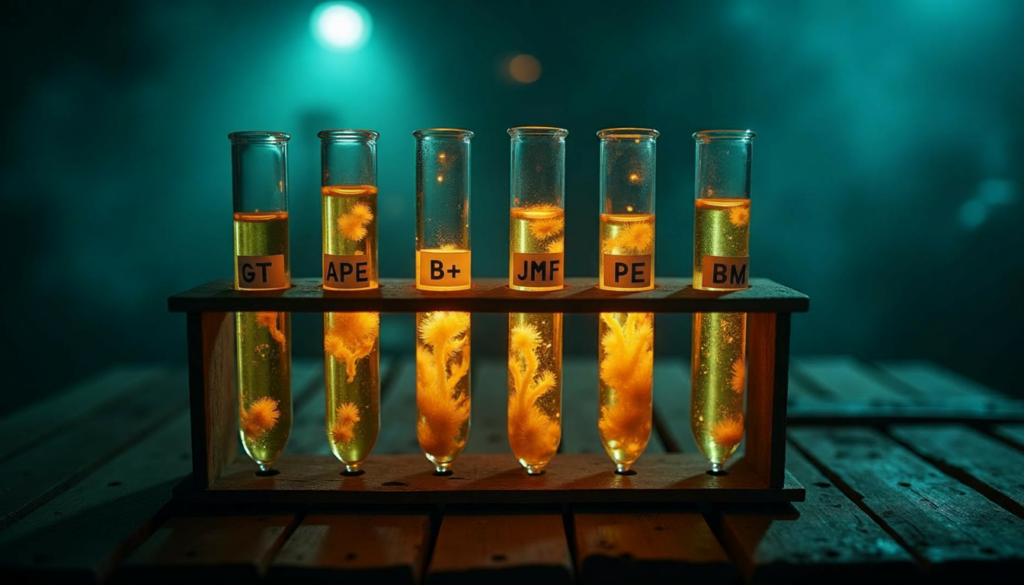
Liquid cultures are the most delicate of the three. Refrigeration is non-negotiable here, and our researchers regularly inspect cultures for any signs of contamination — cloudiness, unusual coloration, or off odors — before they’re used in further work. Properly maintained, a liquid culture typically stays usable for several months, giving researchers a flexible, fast-growing source of mycelium for downstream study.
Across every format in the lab, a few rules hold true: label everything with collection date and source, avoid cycling samples in and out of temperature-controlled storage more than necessary, and always handle specimens under sterile conditions to prevent cross-contamination during transfer or microscopy prep.
We hope you now have a better understanding of the fascinating world of mushroom research. From the genetics vault to liquid culture techniques, sterilization methods, and scaling up production, every aspect of our spore lab reflects our commitment to curiosity and exploration. We welcome you to join us in uncovering the wonders of mushroom research as we work to push the boundaries of knowledge, one spore at a time.